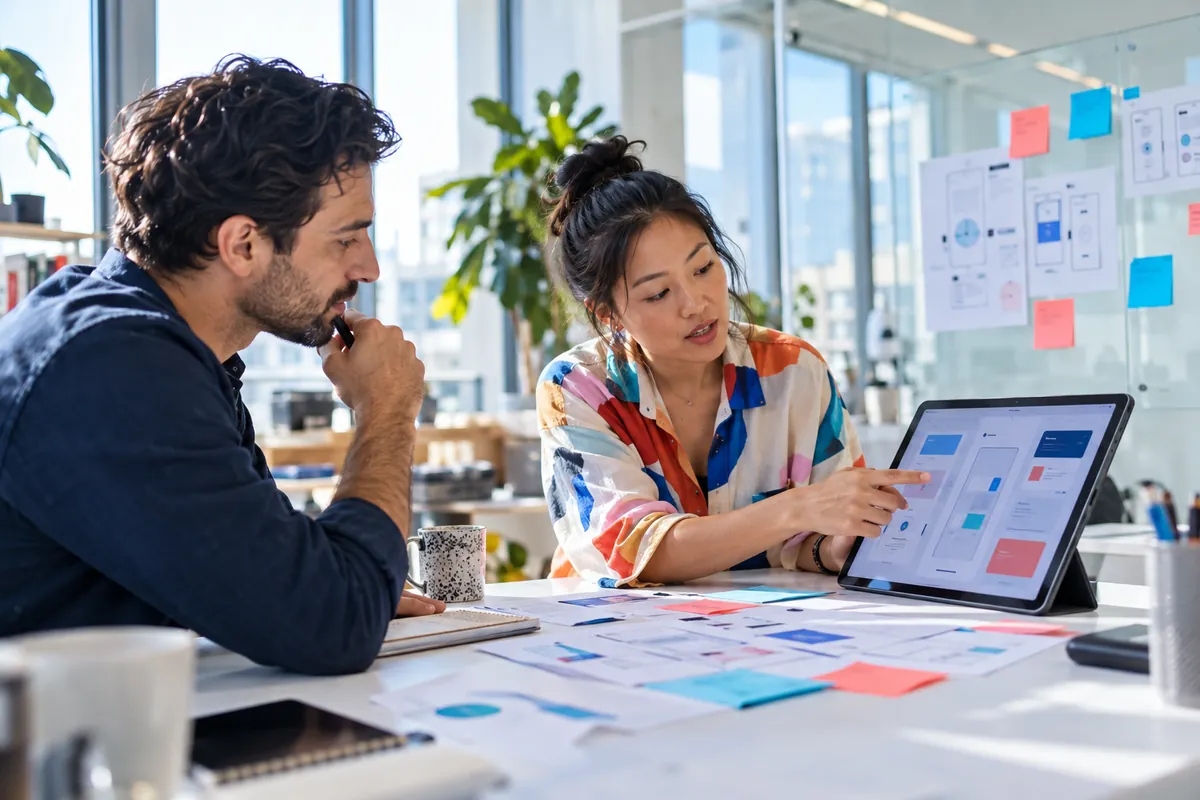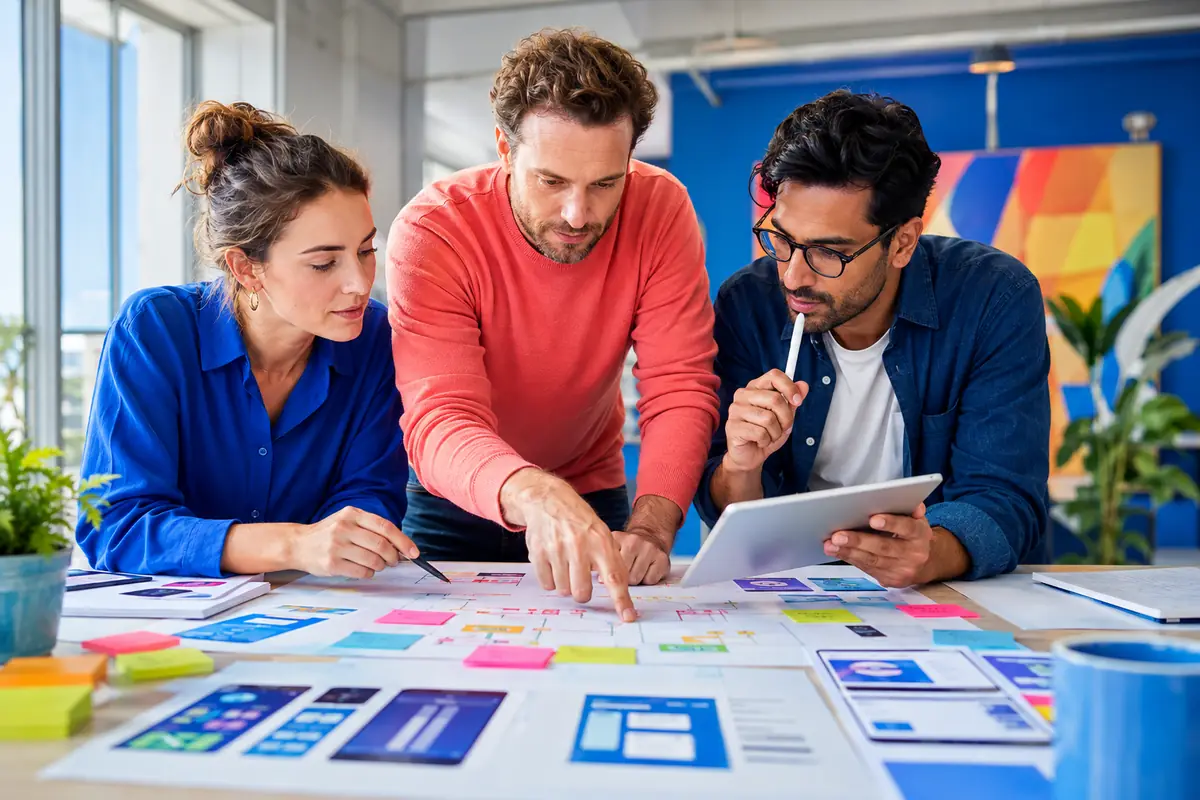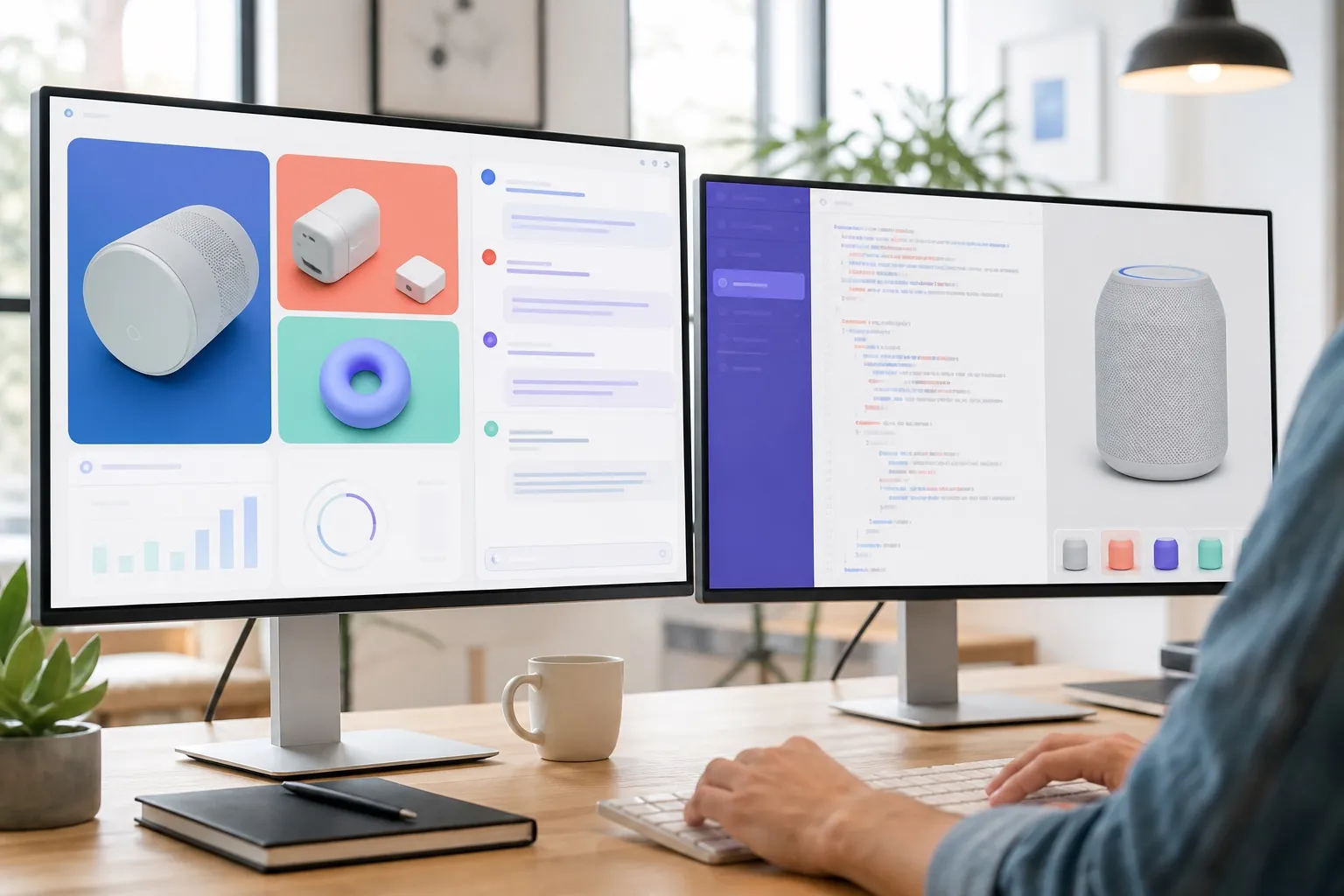

Most AI interface demos stop at generation: describe a page and watch a draft appear. OpenAI positions GPT‑5.6 around a longer loop—using tools, looking at rendered work and refining what it finds. That matters because a convincing code sample and a convincing product experience are not the same thing.
Interface quality becomes visible after the first pass: text wraps, states collide, focus disappears, spacing loses rhythm and an interaction feels heavier than the mockup suggested. A model that can inspect those outcomes fits the real design-engineering process more closely than one that only returns source files.
Design systems are becoming working context
OpenAI shows GPT‑5.6 inferring patterns from presentation systems—layout, typography, spacing, colour and repeated structures—and applying those conventions to new work. The same principle is relevant to product interfaces. A component library and a set of tokens are not enough if the workflow ignores how and why they are used.
The practical input is a whole system: existing screens, components, code conventions, content tone, accessibility requirements and examples of good decisions. Better context turns the task from 'make a dashboard' into 'extend this product without losing its logic.' Figma’s reported integration with GPT‑5.6 in Figma Make points in the same direction for interactive prototypes.
Inspection is the valuable capability
A screenshot can reveal a clipped label, an empty column or a modal that overwhelms a mobile viewport. Interaction testing can reveal a trapped focus state or a filter that resets unexpectedly. These are product defects, even if the code compiles. When an AI workflow includes the rendered experience, the model can reason about outcomes rather than syntax alone.
The first draft is becoming cheaper. The ability to evaluate the draft against real product constraints is becoming more valuable.
This still requires a strong brief and meaningful checks. A model cannot protect a design system that the team has never articulated. It also cannot know whether conversion, comprehension, trust or speed is the primary goal unless those priorities are made explicit.
A useful model-routing strategy
GPT‑5.6 arrives as a family: Sol for the hardest work, Terra for balanced everyday tasks and Luna for cost-efficient volume. For product teams, the useful question is not which model wins every benchmark. It is which level of capability each stage needs.
- Use a fast, efficient model for content population, routine variants and mechanical cleanup.
- Use a balanced model for component implementation and common responsive states.
- Reserve the most capable model for architecture, ambiguous flows, audits and cross-cutting refinement.
- Keep deterministic tests for behaviour that must never vary.
- Require human review where brand, accessibility or business consequences are significant.
What this changes for designers
Designers do not need to become passive approvers of generated interfaces. Their leverage moves earlier and deeper: defining the system, making quality measurable, choosing representative examples, and identifying the moments where a product must earn trust. The craft is expressed both in the interface and in the constraints that reliably produce it.
Design engineers are especially well positioned because they can close the loop. They can translate a visual principle into components, tests and browser behaviour, then inspect whether the implementation still communicates the intended hierarchy and interaction.
The remaining risks are familiar
More capable generation can produce confident mistakes at greater speed. A polished UI may still encode the wrong workflow. A model can follow a broken component pattern consistently. Long-running access also increases the need for permissions, review points and reversible changes.
The responsible workflow is therefore not prompt-and-publish. It is brief, inspect, test, refine and review. GPT‑5.6 may compress that loop and carry more context through it, but the team still owns the product decision. The exciting part is that AI is moving closer to how good digital work is actually made: through repeated, visible judgment. View selected product case studies